
Written by Lizeth Riaño, Community Tourism Development Specialist for Europe at Planeterra
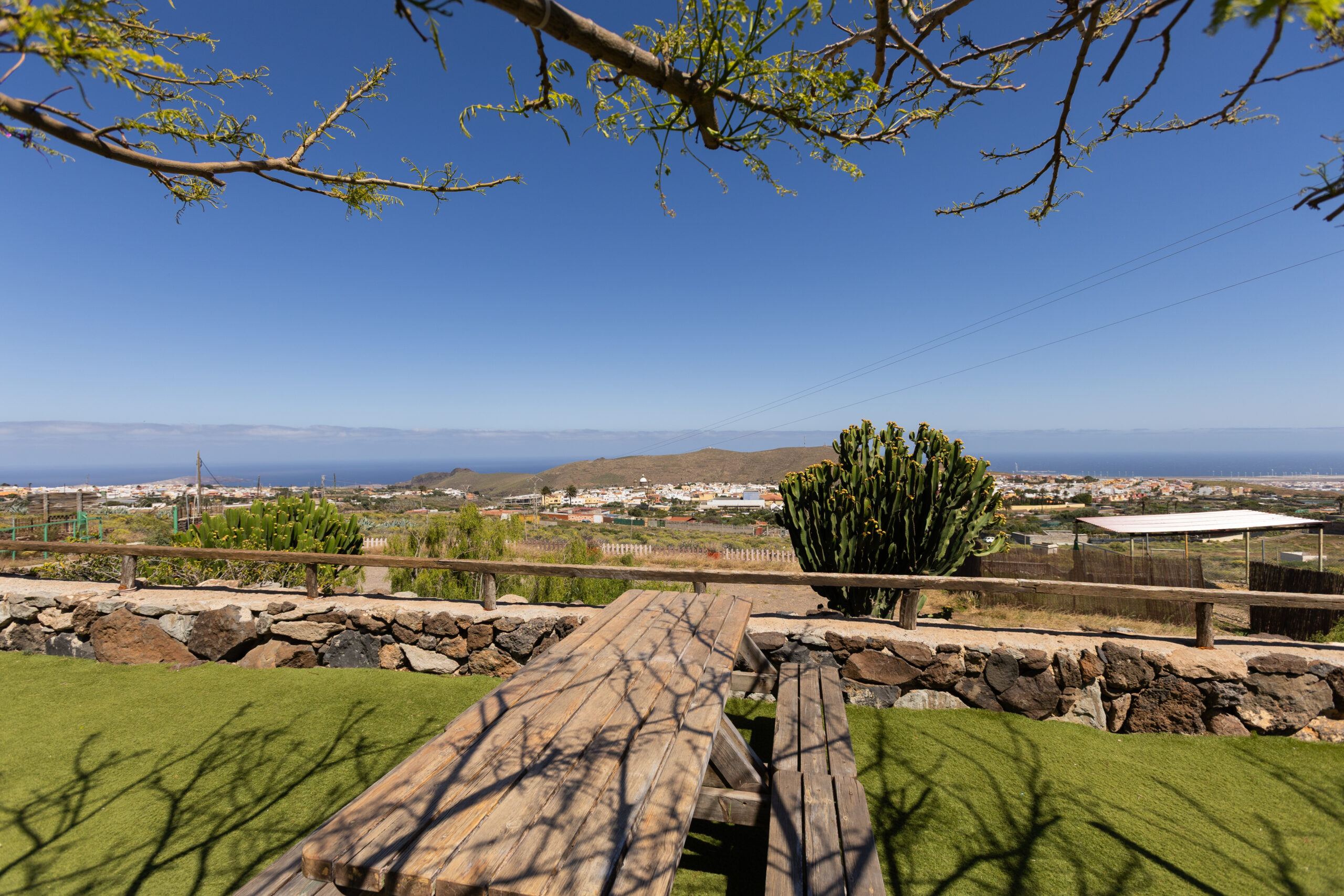
In the rural heart of Agüimes, on the volcanic island of Gran Canaria, everyday life follows a different rhythm. Land, animals, food and family memory are not separate worlds here; they shape one another, sustaining a way of living that is still very much alive.
At La Jaira de Ana, a family-run farm, visitors are invited into that world not as spectators, but as participants. They knead, learn, taste and experience firsthand one of the island’s most rooted traditions: artisanal goat cheese. This is a working farm, a family legacy and a space where rural community culture continues to evolve without losing its essence.
A Community Legacy Rooted In The Land
La Jaira de Ana began as an initiative in 2002 and took shape as a structured enterprise in 2018. Its purpose was clear from the start: to keep the primary sector visible and valued within Canarian culture, while creating a space for learning, connection and exchange.
As the family describes it, the farm is “a place of learning where children and adults can connect with nature, in an environment where animals live freely, happy and free from exploitation.”
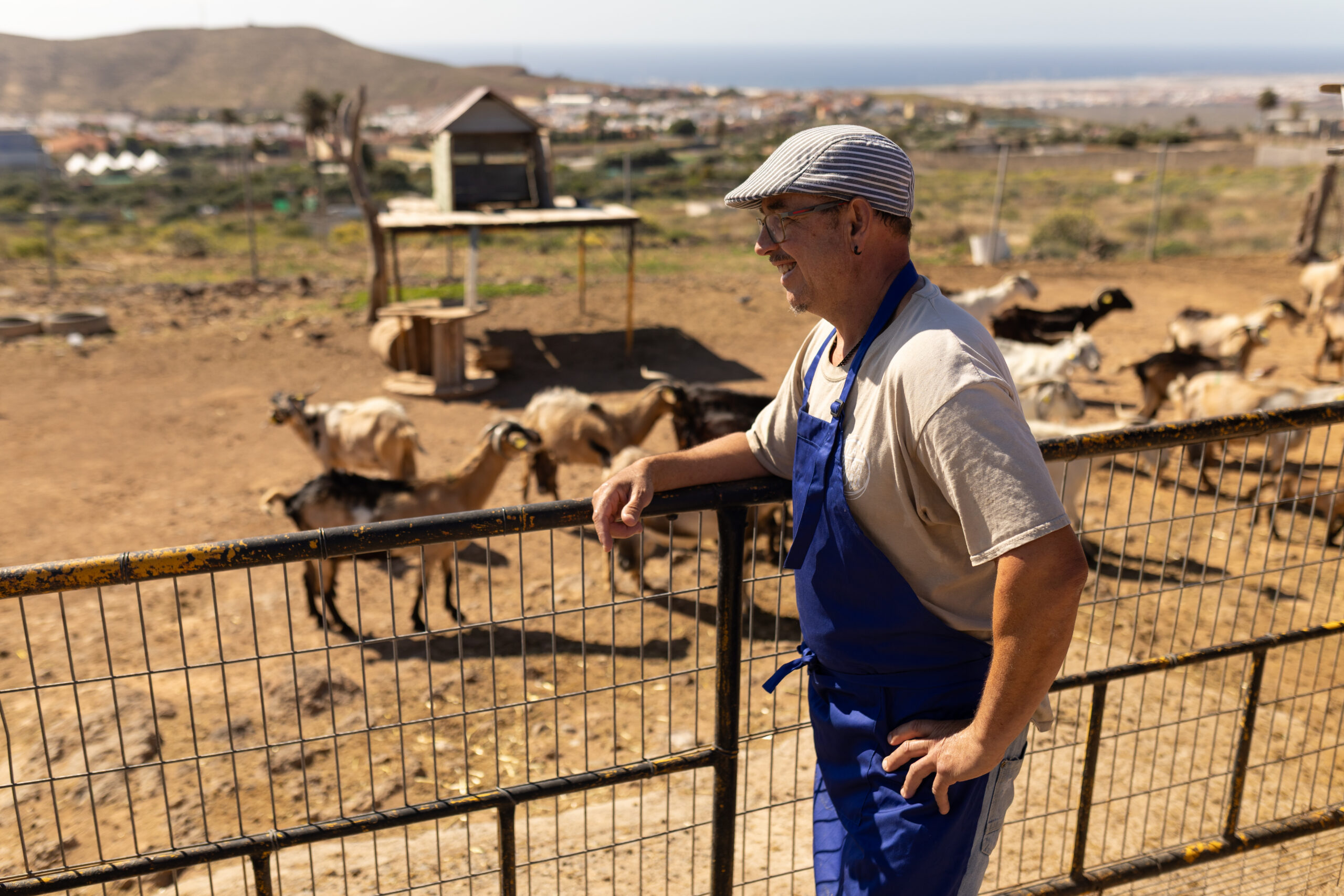
The project is led by Anabel Calderín Castro, a social worker, farmer, educator and daughter of a shepherding family from Agüimes. Her work brings together two worlds: inherited rural knowledge and a professional background in social intervention and community empowerment.
Beyond managing the farm, Anabel has over a decade of experience working with women, families and vulnerable groups, including programs focused on recovery from gender-based violence in natural environments. She also leads initiatives that connect rural development, education and emotional wellbeing. This social and agricultural lens shapes everything that happens at La Jaira de Ana.
Cheese As Living Heritage
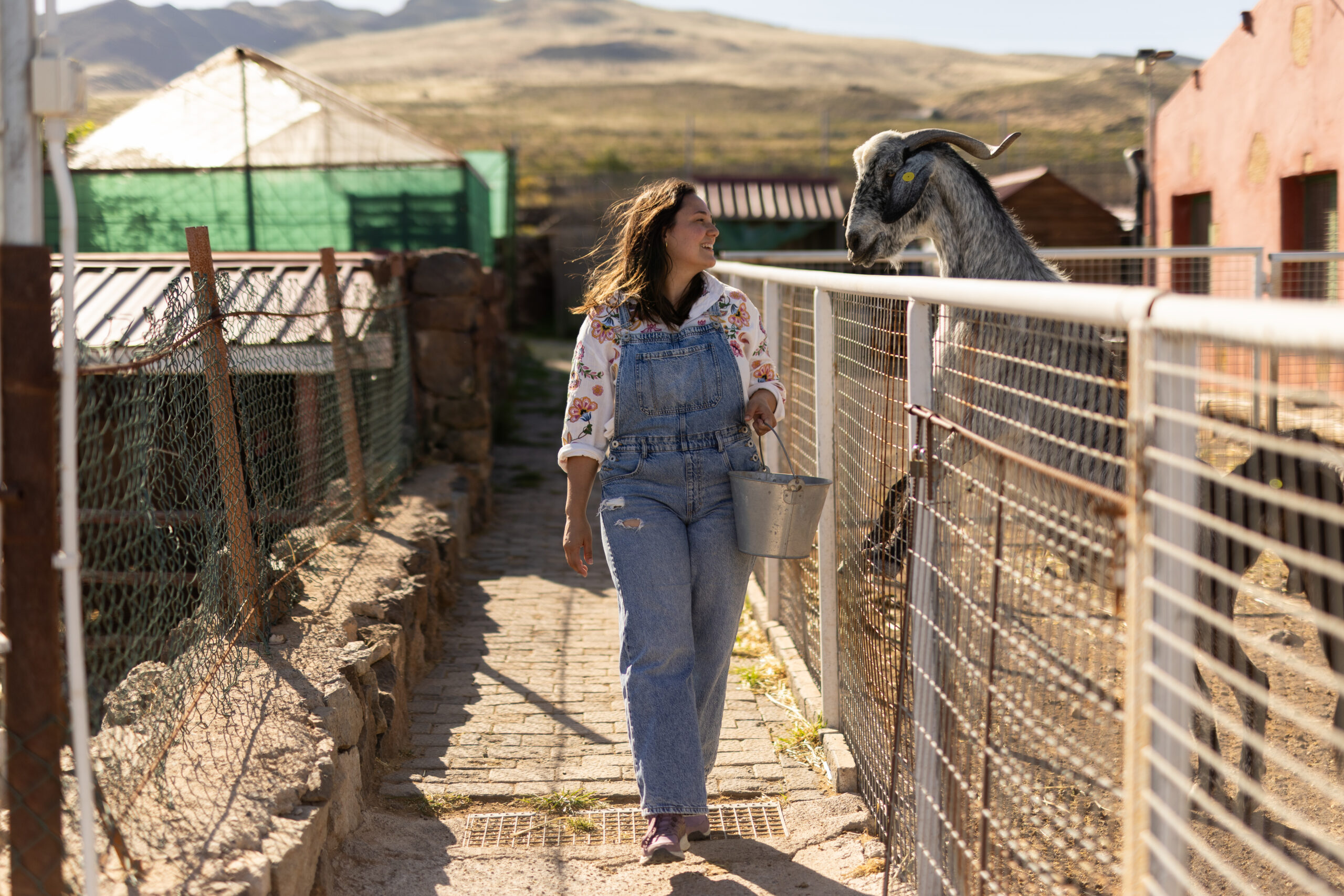
At the heart of the farm is cheese, not only as a product, but as a practice. La Jaira de Ana is part of ASOQUEGRAN, a non-profit association of 26 artisanal cheesemakers working to preserve traditional raw-milk cheese production across the island.
In Gran Canaria, cheese is not only food; it is memory. It carries the landscape, the climate and generations of knowledge. The native Canary Island goat, adapted over centuries to this volcanic terrain, is central to this ecosystem. Its milk is not just an ingredient, but a reflection of place, climate, and history.
Rural life is increasingly under pressure from urban expansion, economic instability, and cultural erosion. This network plays a vital role in keeping its knowledge alive.
The farm sits at the intersection of several urgent realities in rural Gran Canaria. Traditional farming knowledge risks disappearing if it is not actively transmitted. Small-scale farmers struggle to survive economically, local food systems are often replaced by imported industrial alternatives, and younger generations are increasingly disconnected from rural life.
This also matters on an island transformed over the past decades by mass tourism, where rural territories, local food systems and everyday cultural practices can easily be pushed to the margins. Against that backdrop, experiences like this offer a different kind of tourism: slower, more grounded and rooted in reciprocal learning.
The relevance of this approach has become increasingly visible in recent years, as public debate around the impacts of tourism has intensified across the Canary Islands. Questions about how tourism can generate greater benefits for local communities while reducing pressure on housing, natural resources and everyday life have become increasingly important. Community tourism initiatives such as La Jaira de Ana offer a practical example of how tourism can contribute directly to local livelihoods, cultural preservation and rural resilience, while creating more meaningful experiences for visitors.
What makes this tradition survive is not nostalgia, but work. As María del Carmen Pérez, community leader and director of ASOQUEGRAN, explains: “Tourism in experiences like this allows people to understand the full process: from milking to production to maturation. In the end, they discover the small story behind every piece of cheese they take home.”
Each cheese holds that story: the rhythm of milking, the transformation of milk, the patience of aging and the human decisions behind every step. There is no standardised flavour. Each artisan leaves a subtle signature shaped by experience, intuition and inherited knowledge.
Beyond preserving traditional cheesemaking, the project also demonstrates how community-based tourism can create tangible benefits for rural communities while keeping cultural heritage alive.
This combination of cultural preservation and community tourism is also what attracted the support of Planeterra and the DERTOUR Foundation. As Claire Ross, Sustainability Director at the DERTOUR Foundation, notes:
“At the DERTOUR Foundation, we’re proud to support initiatives like La Jaira de Ana that keep local traditions alive while creating real economic opportunities in rural communities. Together with Planeterra, we’ve worked to strengthen this experience so that it benefits the people who sustain it, while giving visitors a deeper, more authentic connection to the culture and landscape of Gran Canaria.”


A Hands-on Experience
The visit unfolds across different spaces of the farm, each revealing a layer of rural life. Guests are first welcomed outdoors and introduced to the story of the farm, the community and goat farming traditions in the region. From there, they move through the milking and production areas, observing how daily work is organized.

But the most important moment comes in the workshop. Visitors do not simply watch a demonstration; they become part of the process. Step by step, they curdle milk, cut curds, shape, press and form their own cheese. The experience is simple, tactile and unexpectedly intimate.
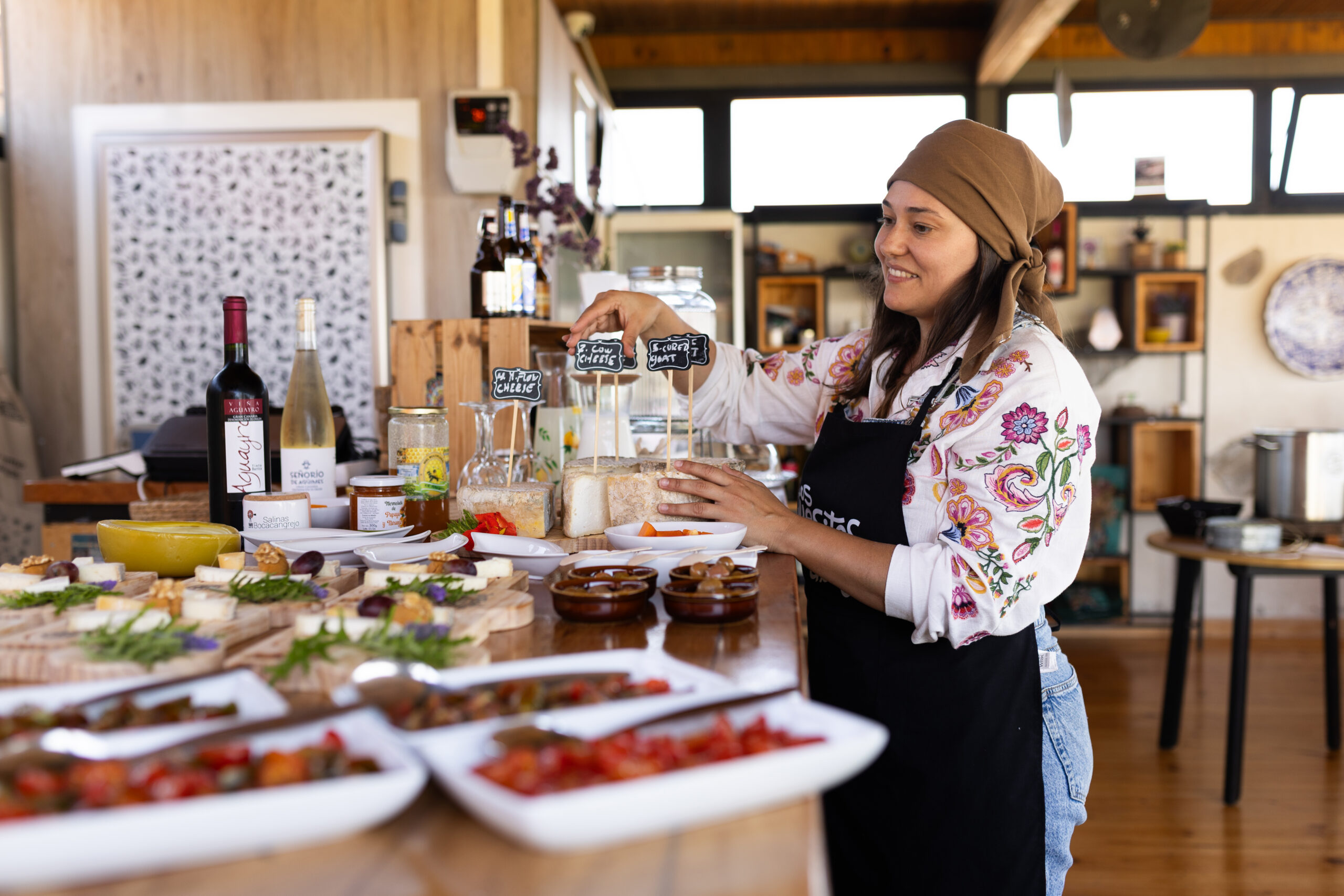
Food then becomes a continuation of the same story. After the workshop, guests gather around a tasting table with cheeses from La Jaira de Ana and other ASOQUEGRAN farms, alongside local wine and beer, gofio bread, jams, sea salt and products made by women’s cooperatives. Nothing is imported for display. Everything has a place, a producer and a purpose.
Anabel observes that the people who come to the farm are often “environmentally conscious, respectful of their surroundings and genuinely interested in learning about the culture and reality of the Canary Islands.” That attitude matters. It turns the tasting into more than a pleasant ending: it becomes a moment of exchange between visitors and the people who sustain the island’s food culture.
Each participant leaves with their own handmade cheese, but also with a clearer sense of where food comes from, how it is made and what it takes to keep local production alive in a globalized world.

A Sustainable Way Of Keeping Rural Life Alive
At La Jaira de Ana, sustainability is not treated as a label, but as a daily practice with environmental, social and economic dimensions. Environmentally, the farm keeps resource use intentional and low-impact: organic waste returns to animal feed or soil, materials are reused where possible, biodegradable cleaning products are prioritized and plastic is minimised.

Socially, the project protects living heritage by making rural knowledge visible, dignified and teachable. It also reflects Anabel’s professional commitment to education, emotional well-being, and community empowerment. The experience is designed so that visitors understand rural life through direct participation, while local producers, women-led initiatives and cheesemakers remain at the centre of the story.
Economically, the model creates value where it is most needed: in the hands of people building viable futures in rural areas. As Anabel explains, experiences like this “generate income for people who are genuinely building businesses in rural areas” and, for that reason, feel “much more authentic and meaningful.”
The collaboration with Planeterra and DERTOUR Foundation has helped strengthen this model. For Anabel, their support has been practical and strategic: we helped her adapt the experience to different types of visitors, improve sustainability choices and think more carefully about materials, preparation and the organisation of the team. One of the most important lessons, she says, has been consistency: being fully prepared before each visit so hosts and guests can enjoy the experience together.
La Jaira de Ana shows that rural life is not something to be observed from a distance. It can be entered, shared and understood through practice. In a world where rural communities are often overlooked, this farm offers another narrative: one of continuity, dignity and active relationship with the land. Not as a memory of the past, but as a living present.
Post a comment