
Written by Deeksha Sharma

“Bees are nature’s best pollinators. Protecting them means protecting our biodiversity.”
~ Vandana Shiva, Indian Environmental Activist
In many rural landscapes, bees are treated as tools of production to increase honey output. But in fragile mountain ecosystems, that approach can do more harm than good. Industrial agriculture, chemical inputs, monocultures and rising temperatures have placed pollinators under strain. In response, some communities are rethinking what beekeeping should look like.
In Badsar village in Kangra District, Himachal Pradesh, India, the Tenacious Bee Collective (TBC) is working with farmers and women’s groups to rebuild beekeeping as a local, place-based practice. Their model is small in scale, grounded in ecological balance, community-led and worth learning about.
Why Beekeeping Needs to be Relearned

Over the past few decades, agriculture in many regions has shifted toward monocultures and high-yield systems. Large fields planted with a single crop reduce the diversity of flowering plants that bees depend on. Chemical pesticides further weaken bee populations and climate variability adds another layer of stress, disrupting flowering cycles and shortening foraging windows.
TBC approaches this issue differently. Instead of focusing on volume, it prioritizes ecological balance. The collective supports native bee species adapted to the Himalayan climate. It encourages low-intervention methods that allow bees to follow natural cycles.
Mentioned below are the values TBC sticks with every day:
- Natural, unadulterated bespoke products: TBC produces pure, raw hive-based products with no added preservatives, preserving the authentic taste of the Himalayas.
- Bee-centric: Every activity is guided by the health of bees, placing ethical care at the heart of reviving bee populations in rural Himachal.
- Environment first, profit later: TBC prioritizes sustainable living and ethical production, placing the environment before profit.
- Community-oriented: The collective brings together beekeepers, farmers and local makers, creating rural employment through training and workshops.
- Inclusive: They believe in an inclusive community where everyone can participate in protecting bees and sustaining the land.

In 2023, Tenacious Bee Collective was selected as a recipient of the Planeterra Community Tourism Fund. The support has been instrumental in strengthening their community-led beekeeping model, enabling them to expand ethical practices and continue their regenerative work in rural Himachal Pradesh.

They also received recognition for their ‘Apidome’, an apitherapy wooden structure (bee hive house) used for therapeutic, relaxing sessions that utilize hive air, vibration and warmth for health benefits.
“The Planeterra Community Tourism Fund from Planeterra has helped us carry forward our work with greater confidence and structure,” says Aditya Singh, Experience and Operations Manager at Tenacious Bee. “It has allowed us to continue building an ethical, community-driven model of beekeeping. For us, it’s not just financial support – it’s encouragement to keep strengthening regenerative practices on the ground.”


At its core, TBC’s initiatives are bee-centric. Every activity, from hive management to product development, is assessed through the lens of bee health.
How Collective Beekeeping Works at Tenacious Bee

In Badsar, beekeeping is closely linked with small-scale farming. Over the past several years, Tenacious Bee has developed a circular model in Badsar village. Small-scale farmers are trained in proven scientific practices of ethical beekeeping while drawing from local knowledge systems. Traditional hive forms, including the “dhalooni” built into house walls, are being documented and revived in collaboration with local apiarists.
Instead of concentrating hundreds of hives in one location, apiaries remain small and dispersed. This reduces competition for forage and aligns hive numbers with the landscape’s capacity. Alongside hive maintenance, TBC cultivates local herbs and flowering plants that nourish bees across seasons. A leased plot in the village serves as a demonstration space where bee flora is grown, and knowledge exchange takes place.
Local community members, especially women, help develop value-added products such as beeswax candles and small-batch apothecary items. Through these activities, beekeeping forms a significant part of a broader ecosystem of production and creativity.
From Biodiversity to Livelihoods

Tenacious Bee is building a knowledge base around distinct Himalayan honey types in collaboration with herbal scientists and apiary institutions. Slow production is central to this model.
Honey is harvested in small batches, and beeswax is hand-processed. This approach avoids high capital investment and heavy mechanization, thereby reducing financial risk. It also preserves authenticity in a market often dominated by blended or highly processed honey.
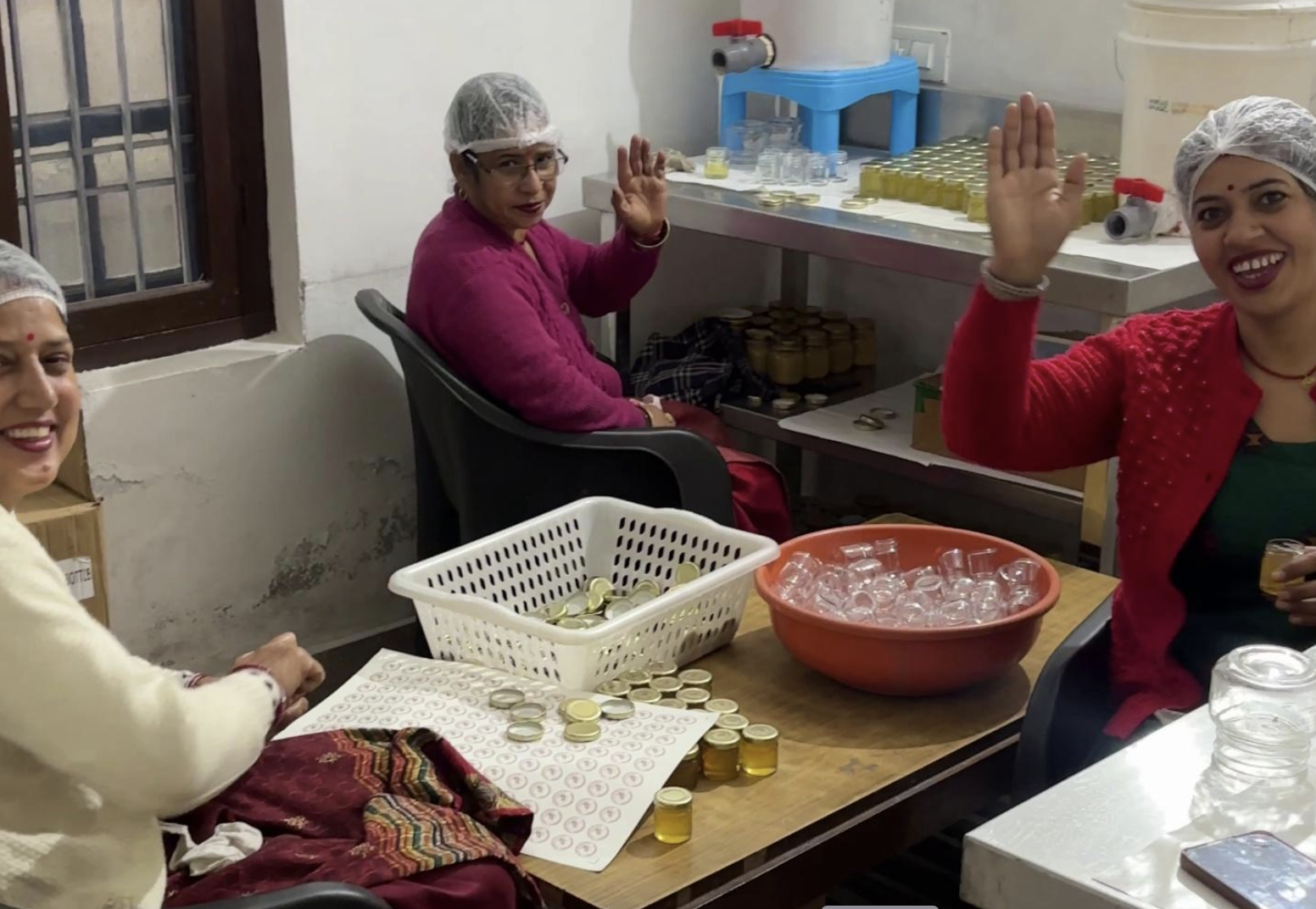
Women in Badsar village have gained new employment pathways through these activities. Training workshops and participation in hive management and product development generate additional income streams. With so much love and light in them, these women fill anyone’s day with warmth and inspiration.
“I love coming here every day,” says Sheena, who works at TBC. “It doesn’t feel like work. I get to spend time with my closest friends, we share our stories, and we build something meaningful together. Tenacious Bee feels like a happy place to us.”
Sheena’s words are echoed by her other colleagues in the collective, who see their work not just as employment, but as a space of friendship and belonging.
A Model that Lets Communities Lead

For organizations involved in community tourism, the key question is how to engage with local communities responsibly. The beekeeping model in Badsar offers a great pathway. At TBC, visitors learn about ethical beekeeping, native species and the role of pollinators in mountain ecosystems. Here, engagement takes the form of educational sessions, attending workshops, product purchases or hive adoption linked to larger orders.
Tourism is not the primary driver of the initiative, but it adds a layer of support. Many travellers stop by, visit the workshop and tour around the organic farm. Decisions about scale and storytelling remain with local stakeholders. This reduces the risk of turning livelihood practices into commercial experiences.

Tenacious Bee’s mission is to create a self-sustaining blueprint for economic, social and environmental development around bees. Its work demonstrates that conservation does not need to be separated from livelihood creation. When communities are equipped with skills, supported by fair markets and trusted to guide their own processes, both ecosystems and incomes can stabilize.
In the Himalayas, where pollinators face mounting pressures, Tenacious Bee’s approach offers a practical way forward. It begins with bees, but it extends to soil health, food security, local enterprise and knowledge revival. Hence, if bees live well, we’ll live well.
About the author:
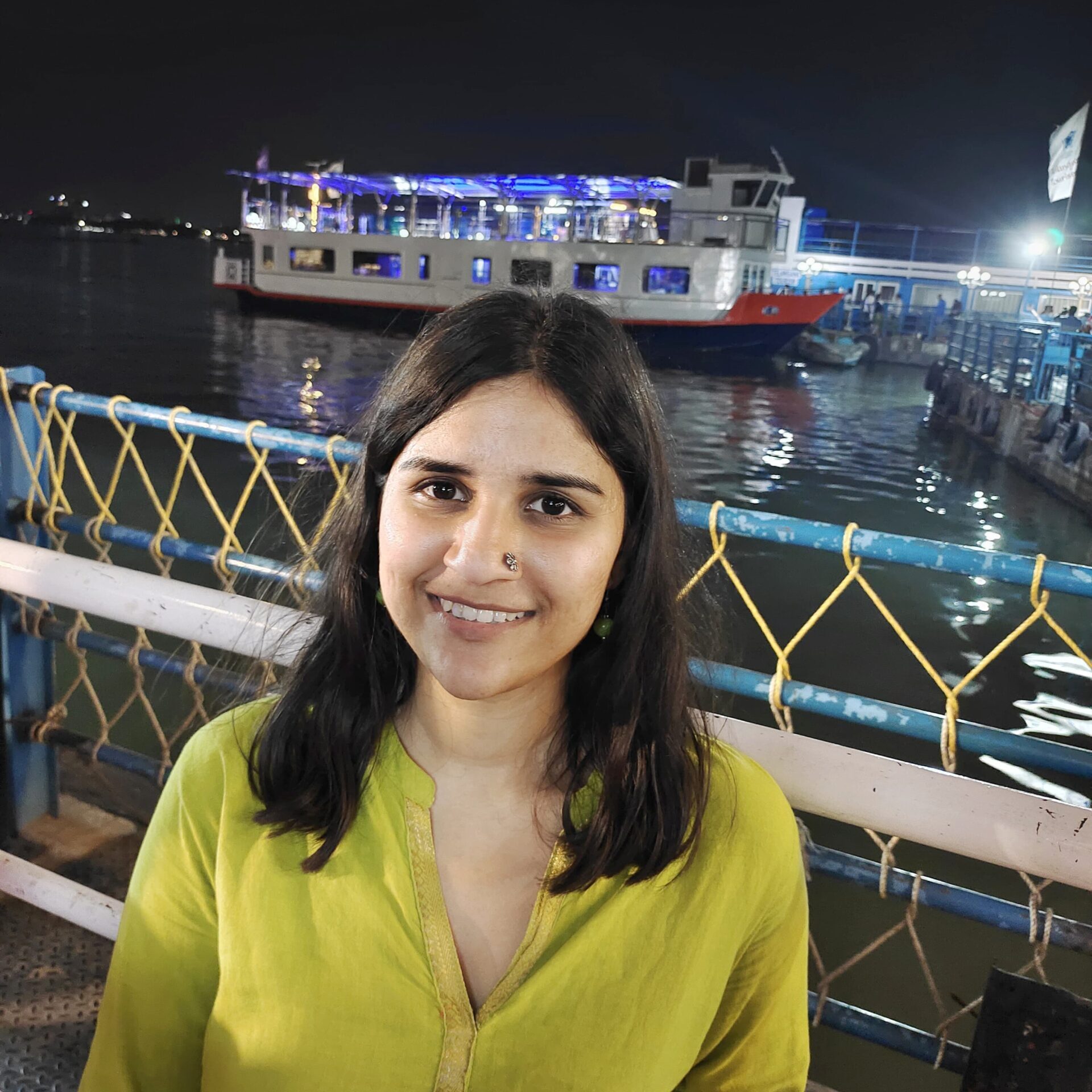
Deeksha Sharma is a travel enthusiast, a passionate writer and a storyteller who loves sharing local stories about conscious travel, communities and culture. She’s a senior storyteller and editorial co-lead at Postcard Travel Club, a global media company fostering a community of conscious travellers. She was also recently nominated for the Regenerative Travel Impact Awards – Storyteller of the Year 2024 by Regenerative Travel.
With her new book launched at the New Delhi World Book Fair in 2025 by the National Book Trust of India (Ministry of Education), Deeksha is helping shape the narrative around tourism’s role in cultural preservation and sustainable development. In her award-winning blog, Story Happens (earlier known as YouInVerse – youinverse.org) – she aims to bring underrepresented voices and traditions to mainstream audiences. In addition, she loves to practice mindfulness, read and write poems, go for long walks, especially in the evenings and enjoy sunsets.
Post a comment