
For generations, artisans across Tunisia have passed down skills through careful hands, patient work, and deep cultural knowledge. But in today’s world of mass production and global markets, these traditions can struggle to find space.
That challenge is exactly what inspired Noura Bent Taieb Rouis to help create the Rachaek Patrimoine Association.
The association was founded with a clear goal: to preserve artisanal heritage while helping artisans adapt to a changing world.
“Our goal was to modernize artisanal products and keep up with the times,” Noura explains. “At the same time, we wanted to introduce our cultural heritage and encourage investment in the creative skills of artisans.”

For many artisans in the region, the challenge was not a lack of talent, but limited opportunities to share their work.
“Artisans had a limited audience and restricted sales,” she says. “This created a desire to expand and reach a broader market.”
The solution was collaboration. Artisans came together to create an association that could strengthen their collective voice and create new opportunities.
Bringing heritage to new audiences
For Noura, joining the association was about more than simply selling products.
“What attracted me was the aspiration to reach a distinguished level and expand the reach of our products,” she says.
Traditionally, artisans relied on small exhibitions or occasional markets. But through the association, they began exploring new ways to connect with audiences and showcase their work.
Visitors now have the opportunity to learn not only about the products themselves but about the stories behind them.
Noura takes particular pride in sharing the origins of the materials and techniques used in the crafts.
“I like explaining the sources of our raw materials and the heritage behind each piece,” she says.
For many visitors, these conversations transform a simple object into something far more meaningful: a connection to a living cultural tradition.
Passing knowledge to the next generation
While visitors are important, some of Noura’s favourite moments come from working with children in the community.
One memory stands out especially.
“Our events with children are always spontaneous and full of energy,” she says. “Their playful spirit inspires us to work even more with the rising generation.”
For artisans, passing knowledge to younger generations is essential to keeping traditions alive.
Workshops and events give children the chance to experience craft not just as something to observe, but something to participate in.
Strengthening craft through collaboration
Partnerships and external support have also played an important role in helping the association grow.
Through trainings and collaborations supported by partners such as Planeterra and Iberostar, the association has been able to strengthen both skills and confidence.
“These relationships helped us improve our knowledge and continue raising the quality of our work,” Noura says.
They also helped artisans rethink the role of their craft.
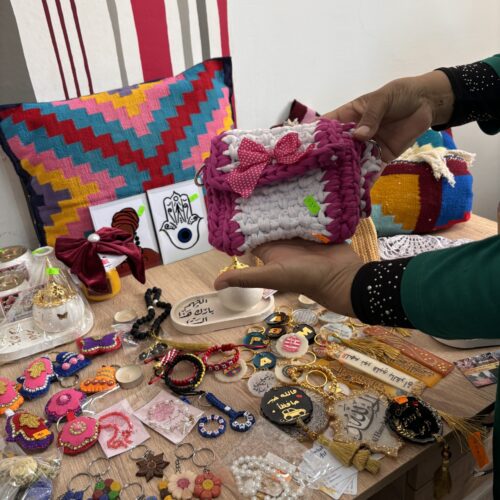
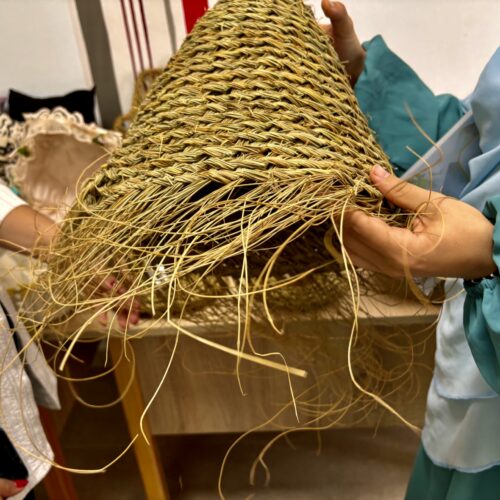
Instead of focusing only on selling products, the association began emphasizing the artistry, mastery, and cultural value behind each piece.
Quality over quantity
In a world full of mass-produced goods, Noura believes the true value of artisanal work lies in its uniqueness.
“Our focus is always on quality, not quantity,” she says.
While markets are filled with industrial products, the work created by artisans tells a different story.
“We use high-quality raw materials and craft each piece carefully,” she explains. “Every creation is unique.”
For visitors, this dedication often leaves a lasting impression.
Noura hopes they leave with a deeper appreciation for the skill, patience, and creativity behind each piece of craftsmanship.
Looking to the future
For Noura, the future of the association is filled with possibility.
She hopes the organization will continue to grow, expanding opportunities for artisans while strengthening the presence of Tunisian craftsmanship locally and internationally.
“I hope the association will thrive and expand,” she says. “I wish to see branches in many areas, increased sales and income for artisans, and a strong presence both regionally and internationally.”
At its heart, the work remains rooted in a simple but powerful idea:
preserving heritage while creating new opportunities for the future.
Post a comment